
Why Day Trading Fails: A Guide to Position Trading for Busy Professionals
Tired of the Trading Hype? You Don't Have to Sit at Your Screen All Day to Win.
Takeaways
If you're a busy professional, nearing retirement, or a seasoned individual looking for a better way to manage your trading portfolio, you've likely heard the intense buzz around day trading. It’s the most talked-about style, but here’s a little-known truth you won’t hear from most vendors: day trading is the least profitable of all short-term trading styles for retail traders.
Trading—especially if you're pursuing a goal like trading for monthly income or building a retirement nest egg—must be treated as a business. And in business, you focus on the highest Return on Time and Expenses. This is where the day trading myth completely breaks down.
Day trading involves collecting "pennies instead of dollars," which forces you to make hundreds, if not thousands, of trades to break even. This volume results in extremely high costs for order processing that quickly consume any profit, no matter how low your broker fees are.
Furthermore, the idea of pitting yourself against a "wily Market Maker" is outdated. The modern marketplace is dominated by High Frequency Trading Firms (HFTs) that provide liquidity through automation. Trying to beat them minute-by-minute is a high-stress, high-risk, and ultimately low-return game for the average individual.
Both Swing Trading and, more importantly, Position Trading offer a significantly higher Return on Time and Expenses than the frantic pace of day trading.
Position trading is underrated, yet it is the most profitable trading style across more market conditions. It is specifically designed for the professional and the retiree. It is ideal for individuals who are still working at their regular job, those too busy to watch a screen all day, or retirees who want to enjoy their retirement while generating income.
Position trading is a system that allows you to trade with less emotion, less stress, and significantly lower risk while targeting higher profits.
One of the biggest advantages of Position Trading is the minimal requirement for tools, equipment, and time:
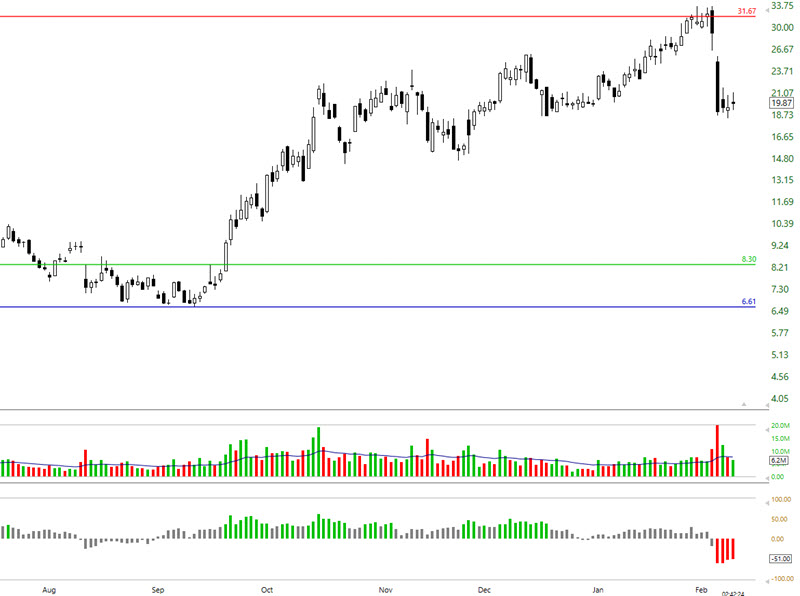 Position trade example showing entry, stop loss and exit levels.
Created with TC2000 charting using TechniTrader stock trading template.
For example, a single position trade could see you holding a stock for just over 3 months for a 22-point gain. That equates to a $22,000 return on a 1,000-share lot trade. That is an exceptional return for a few hours of effort per week and minimal broker fees—a truly safe trading style for retirees and busy professionals.
The common mistake among struggling traders is thinking that the less time they hold a stock, the less often they will lose. The reality is the opposite: the less time you hold a stock, the higher your risk. Successful trading is about proper knowledge and strategy, not screen time. Position Trading offers the system, logic, and capital preservation focus that allows you to work smarter, not harder.
Position Trading isn't just an alternative to the day-trading grind—it is the financially smarter, lower-stress methodology that aligns with the life of a professional or retiree. It prioritizes capital preservation and sustainable, high-impact gains over frenetic, high-cost activity.
To transition from the high-risk gamble of minute-to-minute trading to this systematic approach, you need a disciplined, professional trading plan. A clearly defined plan provides the structure, risk controls, and decision framework required for consistent swing and position trading.
Mel Ainuu
Senior Technical Analyst, Trading Education Specialist
TechniTrader Education
Day trading fails for most retail traders because they compete directly with high-frequency trading firms, face higher transaction costs, and must make rapid decisions under stress. Without a structured, risk-based trading plan, most retail traders experience inconsistent results and capital erosion.
Day trading focuses on short-term price movements within a single session, while position trading holds stocks for weeks or months based on market structure, trend strength, and risk management. Position trading requires fewer trades, less screen time, and allows for more deliberate decision-making.
Position trading is generally safer for retirees because it emphasizes capital preservation, controlled risk, and fewer trades. It avoids the speed and volatility of intraday trading and is better suited for traders seeking consistency rather than frequent action.
Position trading typically requires only a few hours per week to review charts, manage risk, and adjust positions. Unlike day trading, it does not require constant screen time or real-time execution during market hours.
No. Position trading can be done with one or two monitors and a professional-grade charting platform. The most important requirement is a clearly defined trading plan that outlines risk, position size, and trade management rules.
A struggling day trader can transition by reducing trade frequency, extending holding periods, and building a structured trading plan focused on risk management and market conditions rather than short-term price noise.